NICEC Seminar: Reflections on Careers
What have we learned from working on careers and career development?
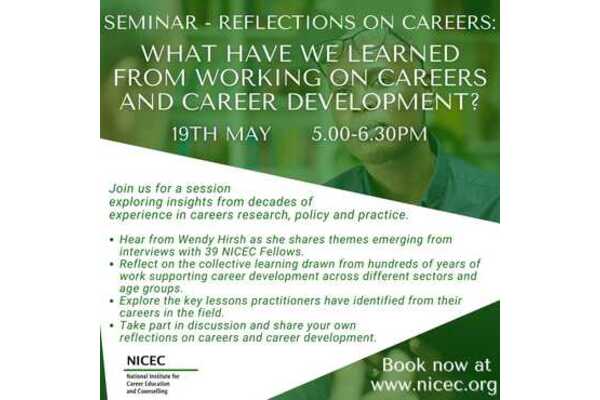
During 2025, 39 NICEC Fellows working in the UK were interviewed by Wendy Hirsh about what they have learned from their work on careers and supporting the career development of individuals. This project was born out of personal curiosity and Wendy felt free to conduct the work as she felt best with the proviso that participants and their data were treated ethically and with care and respect.
The work experience of the 39 contributors totals well over a thousand years and spans different client age groups; different types of career-related work including research, policy, and practice; and different contexts including educational and research institutions, working with or in employing organisations, government bodies and public services, and private practice. A number of Fellows teach career professional qualifications in universities or support associations of career professionals. Interestingly, most Fellows have been front line practitioners at some stage, and a number have led career services.
Contributors were each asked for two or three key learning points from their work in the careers field and to identify one or two issues they found themselves repeatedly wondering about or puzzling over.
In this seminar, Wendy Hirsh, shared some of the themes emerging from these rich conversations with NICEC Fellows. While summarising key findings across identified themes, the seminar highlighted the vibrancy of the research by using verbatim quotes from a range of Fellows, who generously gave permission for their words to be used. Some Fellows kindly voiced their own words during the seminar.
Wendy would like to thank all those Fellows who took part in this project and the seminar for their time and thoughtful input and for so generously and openly sharing their insights, expertise, and concerns. There was not time in the seminar to properly introduce all the contributors, but the NICEC website gives more information about NICEC Fellows.
The seminar slides summarise the key learning points extracted from just over 300 points from the interviews that were thematically coded.
The themes included: the nature of careers and career development support; the labour market and labour market information; issues of inequality; the nature of career decision-making; the activities of career development support including 1-1 coaching and counselling, career education/group work and work experience; the place of theory; the organisation and positioning of career services; evaluation and impact; public attitudes towards career services and career professionals; politics, policy and resourcing and, finally, the career development profession.
Here are some of the research findings and themes that resonated with participants at the seminar or which they raised in discussion:


